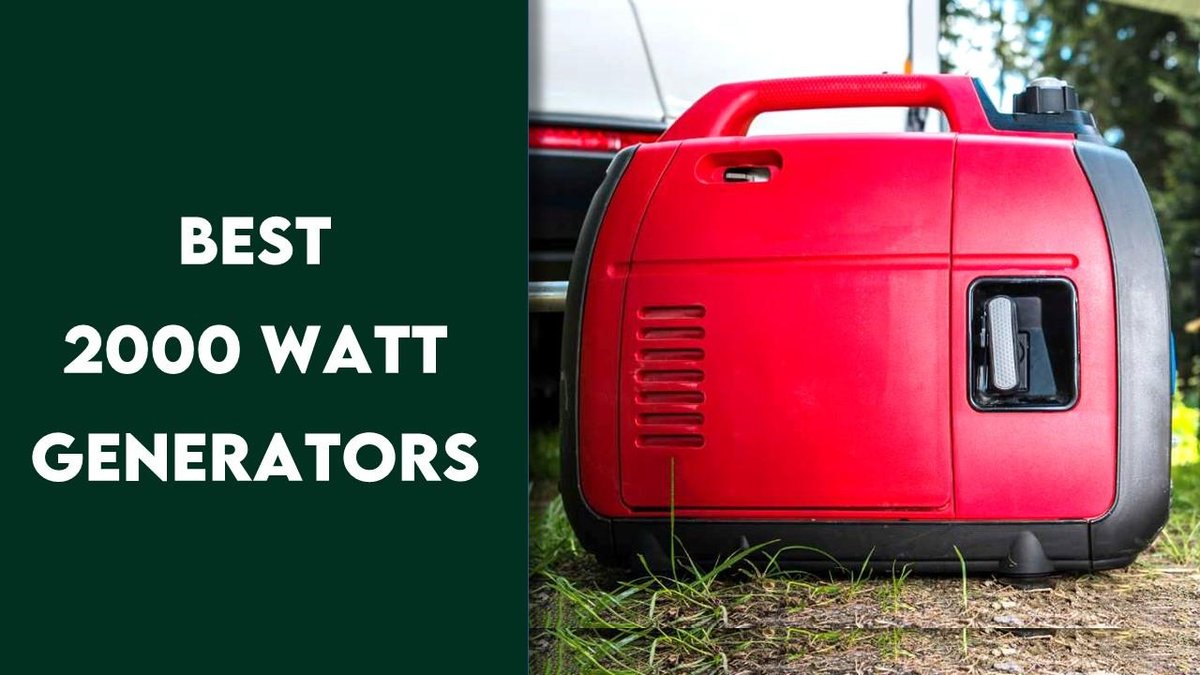
When the lights go out, the job site is remote, or the open road calls, a reliable power source is more than a convenience—it's essential. This guide dives deep into the applications & best uses for 2000 watt generators, revealing just how versatile and indispensable these portable powerhouses can be, and how to harness their full potential safely and efficiently.
At a Glance: Powering Up with a 2000-Watt Generator
- Versatile Power: Ideal for camping, tailgating, remote work, and emergency home backup.
- Running vs. Starting Watts: Understand this crucial difference to avoid overloading. Your generator handles 2000W running, but often 2200-3250W starting for short bursts.
- What It Runs: Easily powers essentials like refrigerators, microwaves, small AC units, laptops, power tools, and lights.
- What It Doesn't: Large appliances like central AC, electric clothes dryers, or electric water heaters are generally out of its league.
- Parallel Power: Link two 2000W generators for double the output (4000W) if your model supports it, offering flexibility and increased capacity.
- Safety First: Always operate generators outdoors in well-ventilated areas to prevent carbon monoxide poisoning and follow all manufacturer guidelines.
Your Portable Power Partner: Demystifying the 2000-Watt Generator
Imagine having the freedom to power your world, whether you’re deep in the wilderness, miles from an outlet on a job site, or simply weathering a storm at home. That's the promise of a 2000-watt generator. These compact, often inverter-style units have become favorites for their balance of power, portability, and fuel efficiency. They're designed to provide reliable backup power for a range of situations—from keeping your food cold while camping to ensuring your home office stays online during an unexpected outage.
The key to maximizing their utility lies in understanding their capabilities, particularly the difference between "running power" and "starting power." Every electrical appliance needs a certain amount of electricity to keep it going (its running watts), but many also require a sudden, higher surge of power just to kickstart (its starting watts). Think of it like pushing a car: it takes more initial effort to get it moving than it does to keep it rolling. A 2000-watt generator can continuously supply up to 2000 watts of running power, but it also boasts a higher starting power capacity, typically ranging from 2200 to 3250 watts for a brief moment. This brief surge is critical for appliances with motors, like refrigerators or air conditioners. For example, a small AC unit might need 1500 watts to run but a hefty 2500 watts to start. A typical refrigerator or freezer, meanwhile, generally requires around 700 watts to run but a significant 2200 watts to start. Knowing these numbers is your first step to becoming a power-management pro.
The Power Playbook: Calculating Your Needs & Optimizing Output
To ensure your 2000-watt generator serves you best without falling short, a little planning goes a long way. Overloading your generator can damage both the unit and your appliances, so precise calculations are non-negotiable.
Here’s your step-by-step guide to calculating power needs and making the most of your generator:
- List Your Essentials: Begin by compiling a comprehensive list of every device and appliance you intend to power simultaneously. Be realistic; you might not need the blender and the toaster at the exact same moment.
- Find the Running Watts: For each item on your list, locate its running wattage. This information is usually printed on a label on the appliance itself, in the owner’s manual, or often easily found with a quick online search for the model number.
- Sum the Running Watts: Add up the running watts for all the appliances you plan to use at the same time. This total should ideally not exceed your generator’s continuous running watt capacity (2000 watts).
- Identify the Highest Starting Wattage: Look at your list and pinpoint the appliance with the highest starting wattage requirement. This is often an appliance with a motor.
- Test the Start: When you connect your appliances, always start the one with the highest starting wattage first, then add other devices one by one. Ensure your generator can handle that initial surge alongside the running watts of any other already-operating equipment.
- Prioritize and Alternate: If your total running wattage exceeds 2000 watts, or if a single starting wattage is too high, it's time to prioritize. Decide which items are absolutely essential and consider running others alternately. You don't need to run your microwave while simultaneously brewing coffee and toasting bread if you're close to the limit.
Smart Power Management Strategies:
- Go LED: Switch to energy-efficient LED light bulbs, which draw significantly less power than incandescent ones (10-20W vs. 60W).
- Limit Simultaneous Use: Be mindful of running multiple high-wattage appliances at once. Stagger their use.
- Unplug the Unused: Even when off, some devices draw "phantom" power. Unplug them if they're not in active use.
- Prioritize Ruthlessly: In a critical situation, understand what truly needs to stay on versus what can wait.
Where a 2000-Watt Generator Truly Shines: Real-World Applications
A 2000-watt generator isn't a one-trick pony. Its sweet spot is providing reliable power for essential items without the bulk, noise, or fuel consumption of larger units. Let’s explore its most common and effective applications.
Home & Office Essentials: Staying Connected and Comfortable
During a power outage, a 2000-watt generator can be a lifesaver, keeping crucial home and office devices operational.
- Illumination: Forget fumbling in the dark. A few LED bulbs (10-20W each) or even a portable light source (500W) can brightly illuminate your home.
- Kitchen Comforts:
- Refrigerator/Freezer (700W running, 2200W starting): Keep your food from spoiling.
- Microwave (600-1000W): Reheat meals quickly.
- Coffee Maker (800-1000W): Don't skip your morning brew.
- Toaster (800-1500W): Toast up some breakfast.
- Smaller appliances like a food processor (400W) or pressure cooker (700W) are also well within its capacity. Just be mindful of running multiple large kitchen appliances simultaneously.
- Climate Control & Cleanliness:
- Small AC Unit (1200W running, 2500W starting): Keep a single room cool. This is a common appliance with high starting watts to be aware of.
- Small Fan (60-100W): Circulate air for comfort.
- Vacuum Cleaner (200W): Keep things tidy even without grid power.
- Hair Dryer (1250W) or Clothes Iron (1500W): Use these intermittently and as standalone items, as they draw significant power.
- Electronics & Communication:
- Laptop (50-100W, office models up to 200W): Stay productive or entertained.
- Television (150-400W) & VCD/DVD Player (100W): Enjoy entertainment.
- Phone/Tablet Chargers (5-10W): Stay connected.
- Security System (500W): Maintain peace of mind.
- For home offices, devices like an inkjet printer (80W) or a fax machine (70W) are easily managed. Even a personal computer (800W) or a laser printer (900W) can run, though you'll need to be aware of other concurrent loads. A copier (1600W) could be run, but would consume most of your available power.
Remote Work & Small Workshop Power: Bringing Power to the Project
Away from traditional outlets, a 2000-watt generator empowers craftsmen, DIY enthusiasts, and remote professionals.
- Small Power Tools: Many handheld power tools fit comfortably within the 2000-watt limit.
- Drill (3/8-inch/4 Amp: 450W; 1/2-inch/5.4 Amp: 600W): For quick repairs or projects.
- Circular Saw (7¼-inch: 1400W): For cutting lumber.
- Belt Sander (1200W): For finishing work.
- Reciprocating Saw (900W): For demolition or tough cuts.
- Air Compressors: A small air compressor can be run, depending on its horsepower.
- ¼ HP Air Compressor (900W running): Great for small tasks.
- 1 HP Air Compressor (1600W running): Potentially manageable, but always check its starting watts.
- Larger Workshop Tools (Use with Caution):
- 10-inch Table Saw (2000W running): This will push your generator to its limit, so it must be the only significant load.
- 10-inch Miter Saw (1800W running): Similar to the table saw, requiring careful power management.
- 6-inch Planer/Jointer (1800W running): Again, typically a single-tool operation on a 2000W unit.
- Work Lights: Halogen work lights (300W, 500W) are easily powered, providing essential illumination for evening projects.
- Airless Sprayer (600W): For painting projects where power isn't available.
While a 2000-watt generator is excellent for a small workshop or individual projects, it’s generally not suited for a bustling construction site that demands multiple high-draw tools running simultaneously. For those scenarios, you'd need a significantly larger unit or multiple generators in parallel.
Outdoor Adventures & Tailgating: Powering Your Fun
From powering a portable grill and sound system for a tailgating party to keeping your RV or camping gear charged, a 2000-watt generator excels at adding comfort to your outdoor experiences. It can run:
- Small electric grills (if under 2000W)
- Lights for your campsite
- Portable speakers and entertainment systems
- Battery chargers for e-bikes or other gear
- Small fans or portable heaters in a tent or RV
This class of generator, especially inverter models, is often praised for its quiet operation, making it ideal for campgrounds and other environments where noise pollution is a concern. Many outdoor enthusiasts specifically seek out reliable units like a Honda 2000 watt generator guide for their proven performance and dependability in various conditions.
What a 2000-Watt Generator Can't Do (and Why That's Okay)
It's important to set realistic expectations. While incredibly versatile, a 2000-watt generator has its limits. It's generally not designed to run:
- Large Central Air Conditioning Units: These typically require 3000-5000+ watts to run and even more to start.
- Electric Clothes Dryers: These are major power hogs, often needing 4000-6000 watts.
- Electric Water Heaters: Another high-demand appliance, usually requiring 3000-5000+ watts.
- Electric Ranges/Ovens: These are also well beyond the capacity of a 2000-watt unit.
- Whole-House Heating Systems (like large heat pumps): While a small heat pump might technically run if its wattage is checked, larger whole-house units are too much.
For these major household appliances, you'd need a much larger generator, often a standby unit, or specialized portable generators with 5000+ watts of output. Understanding these limitations prevents frustration and potential damage to your generator.
Boosting Your Power: The Parallel Connection Advantage
What if 2000 watts just isn't quite enough for your needs, but you don't want to invest in a single, much larger, and often heavier generator? Many modern 2000-watt inverter generators offer a brilliant solution: parallel capability.
This feature allows you to link two identical generators together using a parallel kit, essentially combining their power output. Two 2000-watt generators connected in parallel can function as a single 4000-watt unit, giving you significantly more running and starting power. This approach offers several advantages:
- Flexibility: You can use one generator for lighter loads or both for heavier demands.
- Portability: Two smaller generators are often easier to transport and store than one very large one.
- Cost-Effectiveness: Sometimes, buying two smaller generators and a parallel kit can be more economical than purchasing a single, high-wattage generator.
- Redundancy: If one unit has an issue, you still have the other for essential power.
If you anticipate needing more than 2000 watts occasionally, checking for parallel capability when purchasing is a smart move.
Exploring Alternatives: Power Options Around the 2000-Watt Mark
While 2000 watts is a popular sweet spot, the market offers a range of generators slightly below or above this figure to match diverse needs. For instance, some brands, like Nature's Generator, offer models with 1800 watts of continuous power, which might be perfectly adequate for basic emergency backup or light camping. Others push the envelope with 3000-watt or 3600-watt models, providing a noticeable bump in capacity for those who need to run a few more mid-range appliances simultaneously without jumping to the much larger 5000+ watt class.
When considering an alternative, always re-evaluate your total power needs using the calculation method outlined above. A slightly smaller or larger unit could be a more efficient or cost-effective fit for your specific use case.
Staying Safe: Essential Generator Operating Practices
Operating a generator safely is paramount. Improper use can lead to serious hazards, including carbon monoxide poisoning, electric shock, and fire.
- Ventilation is Key: ALWAYS operate your generator outdoors, far away from windows, doors, and vents that could allow carbon monoxide (CO) to enter your home or occupied spaces. CO is an odorless, colorless, deadly gas.
- Avoid Overloading: Stick to your generator's wattage limits. Overloading can damage the generator and connected appliances, and it's a fire hazard. Use appropriate circuit breakers and extension cords.
- Keep it Dry: Never operate a generator in wet conditions (rain, snow). Store it in a dry, protected area when not in use.
- Fuel Safely: Refuel only when the generator is off and cool. Spilled fuel on a hot engine can ignite. Store fuel in approved containers away from living areas.
- Proper Connections: Use heavy-duty, outdoor-rated extension cords that are rated for the wattage you'll be drawing. Never "backfeed" power into your home's electrical system without a professionally installed transfer switch. This can electrify power lines and endanger utility workers.
- Read the Manual: Always follow the manufacturer’s instructions for operation, maintenance, and safety. Every generator model has unique specifications and safety guidelines.
By adhering to these safety practices, you can enjoy the convenience and peace of mind your 2000-watt generator provides without unnecessary risks.
Making the Most of Your 2000-Watt Generator: Pro Tips for Efficiency
You've got your generator, you know its limits, and you're committed to safety. Now, let’s talk about maximizing its efficiency and lifespan.
- Regular Maintenance: Just like your car, your generator needs TLC. Check oil levels, clean air filters, and inspect spark plugs regularly. Store it properly during off-seasons, and consider using fuel stabilizer if it will sit for extended periods.
- Prioritize and Stagger: As discussed, run your highest starting wattage appliance first, then gradually add others. Avoid simultaneously powering everything, especially if it pushes the limits.
- Monitor Fuel: Keep an eye on the fuel tank. Running out mid-operation can be inconvenient and, for some sensitive electronics, potentially disruptive.
- Inverter Advantage: If you haven't bought one yet, consider an inverter generator. They produce clean, stable power, safe for sensitive electronics like laptops and smartphones, and are often more fuel-efficient and quieter than conventional models.
- Load Management: Understand that a generator runs most efficiently when it's operating at around 50-75% of its maximum capacity. Running it consistently at full tilt or significantly underloaded can impact fuel economy and engine wear.
Your Power, Your Choice: Embracing the Versatility of 2000 Watts
A 2000-watt generator is a remarkably versatile tool, capable of bringing essential power and comfort to a wide array of situations. From keeping your food fresh during an outage to powering your drill on a remote project, its applications are vast and impactful. By understanding the critical distinction between running and starting watts, carefully calculating your power needs, and adhering to strict safety protocols, you can confidently wield this portable powerhouse.
Whether you opt for a single unit or decide to double your output with parallel capability, investing in a 2000-watt generator means investing in preparedness, convenience, and the freedom to power your life, wherever it takes you. Choose wisely, operate safely, and enjoy the robust utility of your new portable power partner.